Aliso Viejo Divorce Attorneys For Small Business Owners
Minyard Morris, a prominent family law firm in Orange County, stands out for its strategic approach and commitment to resolving its Aliso Viejo clients’ cases efficiently. The firm’s unique structure and resources offer significant advantages in handling complex family law matters.
Client-Centric Focus
Minyard Morris’s approach is designed to provide superior client service:
- Personalized Representation: Aliso Viejo clients are matched with, divorce attorneys from Minyard Morris, whose skills and experience align with their specific needs.
- Comprehensive Analysis: The firm provides strategic advice with a thorough analysis of all options relative to clients’ goals.
- Privacy and Discretion: A strong commitment to client confidentiality is maintained throughout the legal process.

Specialized Expertise
The firm’s exclusive focus on Orange County family law for over 48 years has resulted in:
- Deep Local Knowledge: Extensive understanding of local rules, judicial preferences, and court practices.
- Targeted Expertise: Specialization in both high-net-worth and conventional family law cases.
- Reputation for Excellence: Recognition as a leader in the Orange County family law community.
By combining the resources of a large firm with a strategic, urgent approach to case resolution, Minyard Morris offers clients a unique advantage in navigating complex family law matters. Their commitment to collaboration, efficiency, and client service sets them apart in the field of family law.
In 2024, the esteemed and independent lawyer rating service, Best Lawyers in America® listed 19 of 20 Minyard Morris family law attorneys.
At Minyard Morris, we tailor our approach to meet the needs of Aliso Viejo business owners, ensuring their financial interests are safeguarded while resolving cases efficiently.
Tailored Representation
Every case is different, especially when a business is involved. At Minyard Morris, we take the time to understand the priorities of our Aliso Viejo clients. We craft solutions that align with our client’s goals. Whether through negotiation, mediation, or litigation, we deliver results-focused representation.
Unique Challenges For Small Business Owners
Divorces involving businesses require more than standard family law legal representation. Business cases demand specialized expertise to address the unique challenges of:
- Business Valuation: Accurately valuing a small business is complex. Courts consider goodwill, intellectual property, intangible assets, tangible assets, and cash flow when relying on forensic accountants for expert opinions and reports.
- Equal Division: California law mandates equal division of community property. For business owners, this often means addressing the viability of paying a former spouse 50% of business community with after tax dollars. This means, that depending on pending tax law changes, a buyer of the business who has to pay an equalization payment. This is not a deductible, which means that the buyer is paying significantly more net dollars for the business than they would have had the payment been tax deductible. This means that depending on pending tax law changes, a buyer of the business that has to pay a non-tax deductible equalization payment is paying significantly more net dollars for the business than they would have had the payment been tax deductible.
- Financial Strain: Divorce can create significant financial pressures, especially when legal fees, support obligations, and business operations overlap.
Efficiency And Transparency: Our Focus
Our goal is to transition you from “current client” to “former client” as efficiently as possible without sacrificing attention to detail. We know no one wants a divorce to drag on unnecessarily, and we share that commitment. Clear communication and transparency are key to this process. We ensure that every Aliso Viejo client is informed at every stage, empowering our clients to make confident decisions about their future.
The Complex Intersection Of Divorce And Business Ownership
Divorce is always challenging, but when small business ownership is part of the equation, the stakes and complexities are significantly heightened. For business owners in Aliso Viejo, California, understanding how courts approach the valuation and division of a business is essential. Unlike straightforward marital assets such as cash accounts or real estate, businesses involve nuanced considerations, including valuation disputes, liquidity issues, and the potential for long-term financial impacts.
At Minyard Morris, we have extensive experience guiding clients through these complicated cases. This article explores how courts handle small business valuations in divorce, provides insights into working efficiently with legal and financial professionals, and offers cost-effective strategies for those who may not be able to afford traditional representation.

Why Is Understanding Business Valuation Important In A Divorce?
Proper valuation of a business is a critical component of any divorce involving a business owner. An inaccurate valuation can result in an unfair settlements or financial strain that could have been avoided with the right professional support. Partnering with an experienced Aliso Viejo divorce lawyer and forensic accountant can make all the difference.
Consider This Scenario:
You invest $25,000 in legal and accounting services. As a result, the court determines your business is worth $150,000 less than your spouse initially claimed. This adjustment can save you $150,000 in equalization payments — a sixfold return on your investment. While no attorney can promise specific results, the importance of accurate preparation and effective advocacy cannot be overstated.
How Are Marital Assets Divided In An Orange County Divorce?
California law mandates the equal division of community property — assets and income acquired during the marriage. Equal division does not mean splitting each asset in half ; rather, it ensures that each spouse receives 50% of the total value of the marital estate. Accurate valuations are especially critical when a business is involved.
Example of Division:
- Business Value: $400,000
- Other Community Assets: $100,000
- Total Marital Estate: $500,000
Each spouse is entitled to $250,000. If one spouse retains the business, they may need to compensate the other spouse with $150,000 in equalization payments. These payments often involve considerations like interest, a repayment timeline, and collateral to secure the obligation.
In some cases, spouses agree to a “global settlement”. This approach bypasses detailed valuations and allows parties to divide assets based on their preferences, even if the outcome is not a precise 50/50 split. While rare, global settlements can be a cost-effective solution when both parties are willing to compromise.
What Are The Unique Challenges In Valuing A Small Business In A Divorce?
Valuing a small business presents specific challenges that require specialized knowledge and professional expertise. Common issues include:
- Owner Dependency: Small businesses often rely heavily on the owner’s personal skills, reputation, or relationships, making them difficult to value accurately for potential third-party sales.
- Incomplete Financial Records: Many small businesses lack professional bookkeeping practices, requiring forensic accountants to reconstruct financial records before valuation can begin.
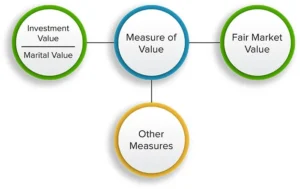
- Investment Value vs. Market Value: Courts typically focus on the business’s “investment value” to the operating spouse, rather than its market value in a hypothetical sale to a third party.
At Minyard Morris, we work with experienced forensic accountants to address these challenges, ensuring business valuations are accurate and defensible.
How Do Orange County Courts Value Businesses In Divorce?
Orange County courts use well-established methods to determine the value of a business. The two most common approaches are:
- Capitalization of Excess Earnings: This method assesses income in exceeding reasonable compensation for the owner and evaluates how that income contributes to the business’s value.
- Capitalization of Earnings: This approach examines historical earnings to determine the business’s future earning potential and overall value.
Methods Courts Avoid:
Speculative methods, such as discounted cash flow (DCF), which projects future income, are prohibited in family law cases. Valuations must rely on historical data and expert testimony, ensuring fairness and accuracy.
What Other Factors Do The Orange County Courts Consider In A Divorce With A Small Business Included As An Asset Of The Community?
- Rules of Thumb: Industry “rules of thumb” (e.g. “two times gross sales”) are inadmissible in family law cases because they lack evidentiary support and often produce unreliable results.
- In-Place Value: Even when a business lacks goodwill or significant profits, courts may assign an “in-place value”, accounting factors like existing infrastructure, operational continuity, and consistent revenue.
- Post-Separation Growth: If a business grows significantly after the date of separation, courts may exclude that increased value from community property, attributing it to the efforts of the operating spouse.
When Is An Appeal In A Business Valuation Decision A Practical Solution?
If you are unhappy with the court’s valuation of your business, an appeal is an option. However, appeals are rarely successful in valuation disputes. Courts have broad discretion in determining value as long as their approach is evidence-based and avoids speculation. Winning an appeal often requires demonstrating that the judge violated established legal principles or abused their discretion, challenges that are difficult to meet.
What Questions Do Business Owners Frequently Ask When They Are Considering A Divorce?
What happens if I owned a business before marriage?
Businesses owned before marriage are considered separate property. However, any increase in value during the marriage may require community reimbursement.
Can I simply transfer the business to my spouse?
No. Courts require equitable division of all community property, and simply transferring the business without proper valuation is not an acceptable solution.
What if I no longer wanted to operate the business?
If you’re over 65, courts cannot force you to continue running the business. For younger spouses, courts may impute income based on your earning potential.
Risks Of Representing Yourself
Attempting to represent yourself in a divorce involving a business is risky and often costly. Without proper legal and financial guidance, you may face:
- Inaccurate business valuations
- An unfair settlement position that disproportionately benefits the spouse, presented by her divorce lawyer
- Prolonged litigation, increasing costs and stress
- The likelihood that being unable to enter documents and other evidence into the record at trial, because of lack of understanding of the Evidence Code and other considerations.
Example: Spending $25,000 on expert legal representation can prevent a $150,000 overvaluation, yielding significant savings and better outcomes
Cost-Effective Options For Business Owners
Recognizing the financial challenges of divorce, a business owner often questions the cost and the necessity of retaining a forensic account.
- Mediation: A cost-effective process that allows you to negotiate business-related issues outside of court.
- Limited Scope Representation: Hire a divorce lawyer to assist with specific aspects of your case, such as business valuation or settlement negotiations.
- Owner-Testified Valuation: Prepare to represent yourself with guidance from a divorce lawyer, or a forensic accountant to ensure your valuation us credible and well-supported.
These options provide flexibility while ensuring your interests remain protected.
The Minyard Morris Commitment
Divorce involving a business is one of the most complex family law challenges you can face. At Minyard Morris, we offer more than legal representation, we provide the strategic planning, collaborative expertise, and personalized service needed to secure your future. With nearly five decades of experience, our firm is the trusted choice for Aliso Viejo clients seeking the highest level of family law representation.
Contact Us Today To Consult With An Aliso Viejo Divorce Lawyer
If you’re navigating a divorce with a small business, let Minyard Morris protect your interests and guide you toward a successful resolution. Call us at (949)724-1111 or visit our Initial Consultation Page to schedule a consultation.