Your relationship with your children is one of the most important things in your life and undoubtedly of chief concern during your Orange County divorce. You need an experienced child custody attorney who will find practical solutions to the child custody issues that arise during your case. Your custody attorney should also educate you so that you may make informed decisions that help you achieve your custody goals and objectives.

At Minyard Morris our team of 20 experienced Orange County divorce attorneys understands how to tailor a child custody solution to your situation and negotiate a parenting plan that will work best for you and your children. We recognize that there are many aspects to consider, the fundamental element being, what is in the best interest of your child or children.
Two Types Of Child Custody
There are two basic types of child custody orders: legal custody and physical custody. Legal child custody allows the parent the right and responsibility to make decisions regarding the child’s health, education and welfare. If parents are unable to agree on these issues, the court may award one parent legal custody in a single area such as education or health. Physical custody pertains to time sharing and where the child lives. Many Orange County family law judges start from the position that a shared 50/50 child custody arrangement is in a child’s best interest.
What To Expect From The Orange County Custody Court
Divorcing parents often disagree on child custody issues. When this occurs, the Orange County family law court creates an order regarding both physical custody and legal custody.
The judge’s focus will always be what he or she perceives to be in the best interest of the child. Although somewhat subjective, California law does provide a list of factors for the judge to consider that includes:
- Each party’s parenting skills and ability to co-parent
- The child’s age and needs, including ties to school and the community
- Any history of substance abuse or domestic violence by either party
- The child’s preference, if mature and old enough for consideration
The judge will also determine child support if the parties cannot agree on this issue.
Effective Lawyering In Child Custody Matters
Properly handling child custody disputes requires a child custody attorney with many different and distinct lawyering skills. Because continued conflict is not good for adults or children, a settlement is most often the best way to resolve child custody issues. Parties should only opt to fight child custody if they believe that there is no realistic alternative. Our Orange County divorce attorneys understand this fact and follow this philosophy.
The 20 divorce attorneys at Minyard Morris have over 350 years of combined Orange County legal experience. Few, if any, Orange County child custody law firms offer this extensive level of legal knowledge and experience. Our distinguished divorce attorneys also assist clients with modifications of child custody orders and representation in paternity actions for parents who were never married.
How Does Legal Custody Differ From Physical Custody?
Legal child custody addresses the right and responsibility to make decisions regarding a child’s health, education and welfare. Parties are generally awarded joint legal child custody in Orange County Superior Court.
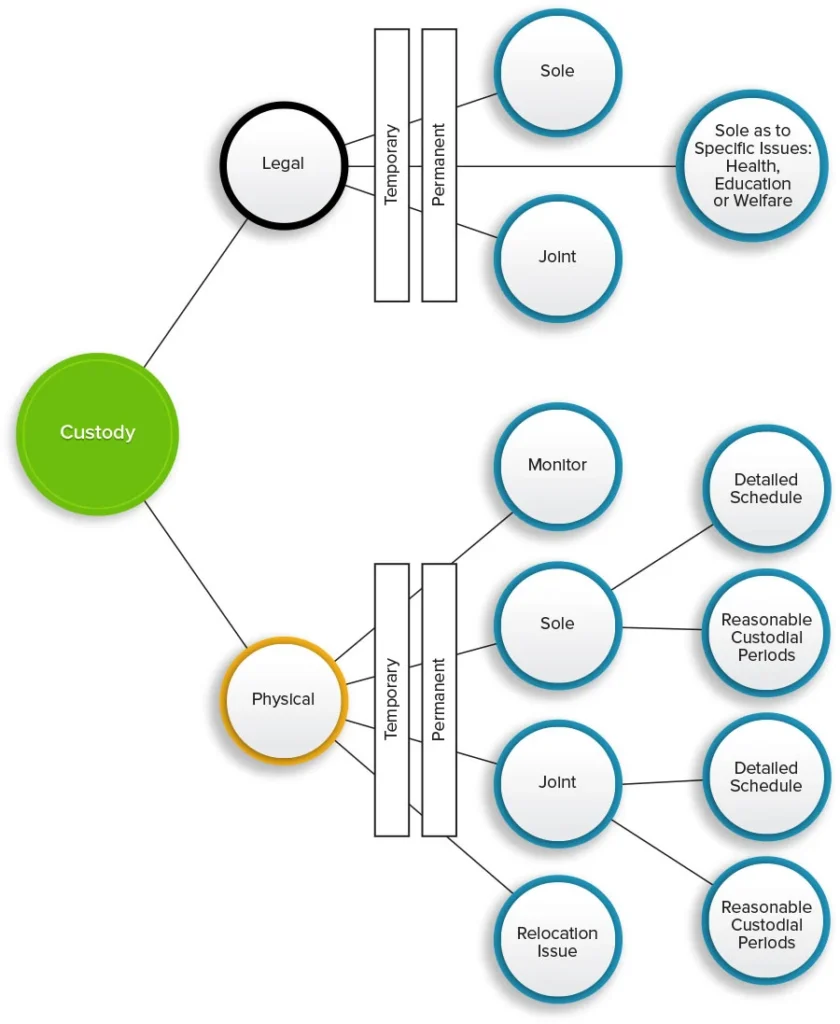
Physical And Legal Custody
In unique situations, a family law court may award legal child custody to one parent in a designated area: education, extra-curricular activities or medical issues. This type of child custody order may be made when the parties have a history of high conflict in one of these specific areas and have demonstrated an inability to co-parent.
Most courts in Orange County are reluctant to make orders designating which school a child should attend and courts will often award legal child custody to one parent relative to educational issues and authorize that parent to make the school selection decisions.
Physical child custody addresses where a child resides.
Parties may have joint or sole legal child custody and physical child custody.
Can Child Custody Orders be Changed?
Because life changes are unpredictable, child custody orders are always modifiable. The parties cannot validly contract with each other that they will not seek to modify or change the child custody arrangement in the future. The divorce court always retains jurisdiction to change child custody orders. The team at Minyard Morris has decades of experience assisting parents with post-divorce custody modification issues.
Generally, the divorce court will only modify “final” child custody orders if there is a showing of a substantial change in circumstances between the date of the existing order and the hearing. If the order is not final, the divorce court may base its decision relative to a modification on the best interests of the child. Additionally, the parties cannot bind the family law court to follow a specific standard of review at future child custody hearings.
Examples Of A Change Of Circumstances
Examples of circumstances that may warrant a modification of child custody order may include the following:
- Child’s preference and age
- Parent’s work schedule
- Move away (relocation)
- Poor parenting/negligence
- Child abuse
- False allegations of abuse
- Allegations of domestic violence
- Interference with parent/child relationship (alienation)
- School-related issues
When One Parent Decides to Change Residences
If one parent makes the decision to move and change the residence of the child, a modification to any existing child custody orders will be necessary. A divorce court must make an order that the child will live primarily with the moving parent or primarily with the non-moving parent. Generally, there is a high burden on a parent with a low percentage time share who is attempting to modify child custody orders and relocate with the child to a new geographic area.
Whether you are seeking a modification or attempting to prevent one, Minyard Morris will help you strategically analyze the best legal course of action for you. Schedule an appointment by calling our office in Newport Beach at 949-724-1111 or contacting us online.
Benefits of Creating Your Own Child Custody Agreements
For many divorcing parents, no part of their final judgment is more important than the child custody agreement. Nearly every parent wants the agreement to reflect their own wishes regarding child custody matters. Many people find that creating their own child custody agreement allows them more control over the final outcome, while also tailoring the plan to fit the specific needs of their family.
The 20 divorce attorneys at Minyard Morris can help you create a child custody plan that not only addresses your family’s unique situation but also meets the family law court’s criteria for approval. We have been assisting families with child custody issues for over 45 years, and our attorneys have practiced exclusively in Orange County for that period. We are familiar with the philosophies of our local family law judges and understand the most likely result of a child custody trial. Our team understands the types of arrangements likely to succeed or fail if the issue is litigated and excels at finding creative solutions to difficult problems.
Streamlined Process
If you and your former spouse reach a child custody agreement early in the process, the judge will not require you to attend court-mandated child custody mediation. The judge will sign most child custody stipulations and will not question either of your decisions relative to these matters except on rare occasions.
If you cannot agree, however, the judge will require court-mandated child custody mediation. The process is confidential. The results of the mediation are only reported to the judge when and if you and your spouse reach an agreement. If mediation does not produce an agreement, your attorney will still attempt to negotiate a resolution.
Gaining the Court’s Approval
Although the judge will give great deference to an agreement created by the parties, the arrangement still must meet certain conditions. For example, the court will not honor an agreement between the parties that designates the plan as non-modifiable. The divorce court always retains the ability to make future orders that modify the terms of any child custody order.
When the divorce court must make orders relative to child custody, it will make the determination based on the best interests of the child, while still addressing the practical needs of you and your children.
Modifying an Existing Child Custody Order
Life changes are inevitable. For that reason, all child custody orders are subject to modification. When one parent requests a modification, they must generally show that a “substantial change of circumstances” has occurred. When your carefully tailored child custody agreement faces this type of change, we are here to facilitate a new arrangement that will protect your time with your children.
Take Charge Of Your Child Custody Arrangement
At Minyard Morris , we are committed to providing the sound counsel needed to ensure that your children are the top priority. Call 949-724-1111 or contact us via email to find out how we can assist you in creating the child custody agreement that will work best for you and your children.
Is Domestic Violence Considered by Orange County Family Law Courts When Making Child Custody Orders?
Documented domestic violence may have a significant impact on a divorce court’s child custody orders.

Reach Out To The Firm That Puts The Child First
At Minyard Morris, we know that the best solutions to child custody issues are child-centric. This means we work with parents who are committed to the health and well-being of their children in child custody cases. Call 949-724-1111 or reach us online to find out more about our services.