Laguna Hills Child Custody Lawyer

Laguna Hills Child Custody Lawyer

Laguna Hills Child Custody Attorney

Whether you are going through a divorce or legal separation or are simply seeking child custody in California, the team of 20 Laguna Hills child custody lawyers at Minyard Morris (formed over 48 years ago) is here for you. We know that these are often some of the most stressful and emotionally challenging family law cases, and we are prepared to use our experience and resources to fight for you and your parental rights. We have the ability to build a strategic plan that allows you time with your children.

The thought of losing time with your child can be terrifying. You are their parent and want to ensure that whatever is done in their custody agreement is done with their best interest in mind. At Minyard Morris, we take this best interest to heart, but we also care about what is in your interest. You deserve time with your child, and we are prepared to aggressively advocate for the retention of your parental rights as we seek the right arrangement for your child’s custody.

Trusted Laguna Hills Child Custody Lawyer

What Is Child Custody in Laguna Hills, California?

Child custody is a term used to establish the legal relationship between a child and parent and not just where that child resides. In Laguna Hills, many parents can agree on a form of joint custody, where they will share the rights and duties of raising their child. However, the minute nuances of these agreements can be contested, leading to the need for court hearings and a judge’s intervention in making and ordering the final ruling on the child’s custody.

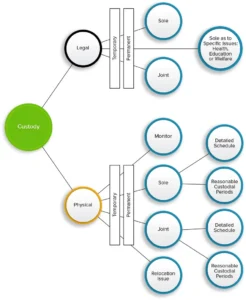
In California, there are two main forms of custody, each with their own subtypes. These two main kinds of custody include:

  • Legal custody. This form of custody refers to the parent’s rights and responsibilities in making certain decisions regarding major areas of their child’s life. These areas can include their child’s education, healthcare, welfare, and religious upbringing. The two subtypes of legal custody can include:
    • Sole legal. This refers to cases in which only one parent is awarded legal custody and retains the right to make all the important decisions regarding the child’s life.
    • Joint legal. This form of legal custody lets both parents communicate and hold the right to make certain decisions regarding their child’s life. It is vital that in these situations, the parents can communicate and find grounds for compromise.
  • Physical custody. This form of custody refers to which parent the child resides with. Physical custody is either:
    • Sole custody. In many cases, one parent will be named as the custodial parent, and their child will live with them. The other parent may seek visitation rights, such as for holidays or vacations, or in cases where the non-custodial parent may be deemed unfit for custody, this parent may seek supervised visitation with their children.
    • Joint custody. In these situations, both parents retain the right to physical custody of their children, though the split between their homes may not be entirely equal and will be left up to the presiding judge.

How Minyard Morris Can Support You in a Child Custody Battle

With over 350 years of collective experience on our side, the team at Minyard Morris is here to serve you. When you hire us, you aren’t simply getting a single attorney to help you in your child custody case, but a team of 20 professional lawyers who are ready to aggressively fight and protect your parental rights in the state of California. Instead of facing this challenging legal situation on your own, entrust your case to the professionals at Minyard Morris.

When you hire our team, you can expect the following legal services:

  • Educating you on California child custody laws and how they might impact your case.
  • Negotiating with your co-parent and their legal team to reach an agreement that benefits your parental rights.
  • Defending you in a court hearing and protecting your rights to child custody.
  • Assisting you in any modifications you might wish to seek at a later date following a final custody ruling should circumstances call for it.

Do not wait to consult with an attorney until the battle becomes heated. Rather, reach out to the team at Minyard Morris the moment you realize a child custody case is imminent. The sooner we can meet with you, the sooner we can begin to build a legal strategy that can protect your parental rights and assist you in aggressively advocating for custody.

Expert Laguna Hills Child Custody Attorney

FAQs

Q: What Will a Family Lawyer Charge?

A: It is difficult to name an exact number as to how much a family lawyer will charge in California due to the fact that there are many factors involved that can influence the final cost analysis of an attorney. These factors include the complications and length of your case as well as the skill level, effort, and experience of your attorney.

Q: What Factors Determine the Best Interest of a Child?

A: When determining a final ruling for child custody in California, the presiding judge will consider several factors when deciding on what they believe is in the best interest of the children involved. These factors include the health, welfare, and age of the child, the parent’s home environment, the wishes of the child, and any history of domestic violence or substance abuse on the part of the parents.

Q: How Long Can a Case for Custody Take?

A: There is no way of telling how long a child custody case may take in California without first knowing what unique factors are involved in the case. For example, a case might take longer if you and your co-parent are unable to communicate, cooperate, or find grounds on which to compromise when deciding on a parenting plan and custody arrangement.

Trust Your Child Custody Case to the Team at Minyard Morris

If you are facing a child custody battle in Laguna Hills, California, the team at Minyard Morris is here for you. We know just how difficult these cases can become and how confusing custody law can appear. Allow us to come alongside you during this difficult time and help you assert your parental rights. Contact us today to schedule your initial consultation.

Laguna Hills Child Custody Lawyer FAQ

A client should expect their divorce lawyer to be beyond candid, and explain to them the strengths and weaknesses of the case, and the probable outcome of litigation at the first attorney-client meeting and at every stage during the process, as new facts unfold. A client should have the opportunity to make informed and timely decisions about their children. Our Orange County divorce lawyers are known for telling our clients the good, the bad, and the ugly about child custody matters – early and often. Clients deserve to hear the truth, not a sales pitch.

The parties may agree to resolve their differences in child custody and child visitation matters. If the parties reach an agreement, they are not required to attend a court mandated child custody mediation. The Orange County divorce court will sign a child custody stipulation, and rarely questions the parents’ decisions in these matters.

If the divorce court is asked to make orders relative to child custody, it will make the determination based on the best interests of the child unless the hearing is the modification of a “final” order (Montenegro v. Diaz) and in that case, the test will be whether there has been a “substantial change of circumstances.” (Burchard v. Garay)

The divorce court considers many different factors in determining “best interests” or “change of circumstances.” These two concepts are somewhat vague and subject to interpretation. Results of child custody litigation are not overly predictable by divorce lawyers. Different Judges may rule different ways on the same set of facts. Divorce courts have wide discretion in child custody litigation and reversing a divorce court’s child custody order on appeal is rare given the high degree of discretion.

The parties may not contract with each other or stipulate as to a particular standard of review relative to future child custody orders and the divorce court would not be bound by such stipulations. In Marriage of Cohen, the court ruled that parties could not bind the court relative to child support orders and the same rule would apply to child custody orders. (IRMO Cohen)

Best Interests of Child

Legal child custody addresses the right and responsibility to make decisions regarding a child’s health, education and welfare. Parties are generally awarded joint legal child custody in Orange County Superior Court.

In unique situations, a family law court may award legal child custody to one parent in a designated area: education, extra-curricular activities or medical issues. This type of child custody order may be made when the parties have a history of high conflict in one of these specific areas and have demonstrated an inability to co-parent.

Most courts in Orange County are reluctant to make orders designating which school a child should attend and courts will often award legal child custody to one parent relative to educational issues and authorize that parent to make the school selection decisions.

Physical and Legal Custody

Physical child custody addresses where a child physically resides, and the parenting time of each parent. A physical child custody order determines which parent has supervision rights and responsibilities for the child during designated periods. The parties may be awarded joint physical child custody, or physical child custody may be awarded to just one party. Joint physical child custody does not necessarily mean equal time sharing. A 70/30 time share could be labelled joint child custody. The parties may be awarded joint physical child custody, with one parent being designated as the primarily custodial parent.

Divorce courts in Orange County rarely split sibling’s between the parents. It is generally believed that it is in the sibling’s best interests to live together.

Before any contested child custody matter may be presented in a divorce court, the parties must attend court mandated child custody mediation. If one of the parties fails to attend the child custody mediation, the custody consequences may be sanctions and/or a delay in the proceedings. In Orange County, child custody mediation is confidential and the results of the child custody mediation are not reported to the judge unless a child custody agreement is reached. The rules are different in other counties.

Divorce lawyers do not accompany the parties in the child custody mediation sessions.

It is important to speak with an Orange County divorce lawyer prior to the child custody mediation in order to understand the process, purpose, goals and most likely result in court if an agreement is not reached in mediation.

It is critical to understand that an agreement is reached in mediation, that agreement will likely be the order that will control custody for years to come. Although child custody orders can be modified, it is not always easy to do so. The child custody mediator will report any agreements to the Orange County family law Judge assigned to the case.

If a party cannot attend the mediation, he or she must telephone the mediation office and reschedule the appointment.

The divorce court may, on its own motion, or at the request of a divorce lawyer, order an Evidence Code Section 730/Family Code Section 5111 child custody evaluation, a “child custody investigation” (CCI), or appoint an Orange County divorce lawyer to represent a child (minor’s counsel). The divorce court may also order the parties to participate in therapy relative to child custody for a limited period of time.

The Potential Family Law Team

Divorce courts look at many different factors relative to making its child custody orders including the factors set for the below:

  • Age and maturity of child
  • Child’s preference
  • Health, education, and welfare of the child
  • Relocation of child’s residence
  • Mental/emotional disorders of a parent or child
  • Special needs of the child
  • Cooperation or lack of cooperation between the parents
  • Domestic Violence
  • Work schedules of the parents;
  • Parenting skills
  • Relationship between the child and each parent
  • Educational needs of the child
  • Cultural factors
  • Criminal activity
  • Parental support systems
  • Parent’s willingness to promote continuous and frequent contact with the other parent
  • Drug use

A divorce court will look to a number of factors in making the determination in the relocation of a child’s residence including, but not limited to: the extent of shared custody, willingness to place the children’s best interests first, reasons for the move, relationship of the child with each parent, distance of the move, age of the child, ability of the parents to cooperate and communicate, stability and continuity, relationship of the parents, and the child’s wishes.

In some contested child custody cases, the divorce court may order the parties to participate in an Evidence Code Section 730/Family Law Code Section 3111 child custody evaluation, performed by a mental health professional who makes recommendations to the divorce court about a child custody and related matters.

An Orange County family law court is not required to approve the parties agreement to retain an Evidence Code Section 730/Family Law Code Section 3111 expert to conduct a child custody evaluation. Most Orange County divorce courts do not automatically grant requests for child custody evaluations for a variety of reasons.

Evidence Code Section 730/Family Law Code Section 3111 child custody evaluations delay the resolution of a contested child custody case by four months or more and child custody evaluations can cost tens of thousands of dollars.

The child custody evaluator interviews the parties, the children, and may interview neighbors, friends, doctors, therapists, relatives, teachers, or other individuals that have relevant information. The evaluator may visit the home of each parent to perform a “home visit.”

Typically, the child custody evaluator will meet with the parties alone, the parties together, each party with the children, and the parties and the children together. The divorce lawyer does not accompany a client in the sessions.

The appointment of a child custody evaluator can increase the attorneys fees on both sides, as a counter expert may be retained, deposing the individuals interviewed by the child custody evaluator, lengthening the trial itself due to the additional witnesses and potentially expanded issues.

Testimonials

HEAR FROM MINYARD MORRIS CLIENTS

Contact Us

SCHEDULE A MINYARD MORRIS CONSULTATION

Contact Minyard Morris now to schedule a consultation with our attorneys and legal professionals.