Why Choose Newport Beach’s Minyard Morris for Your Divorce?
Selecting the right Newport Beach divorce lawyer is one of the most critical decisions you’ll make. It’s essential to carefully evaluate attorneys and their law firms, taking the time to review their website and compare their messages. What do they emphasize, and what do they omit? Does their philosophy align with your priorities and how you envision your divorce being managed?
Divorce is a challenging process in any scenario, but when it involves a business, the complexities can increase significantly. The choices you make now will shape your financial future, and long-term peace of mind. It is crucial to work with a skilled Newport Beach divorce lawyer who not only specializes in family law but also has a deep understanding of the intricacies of dividing business assets. The right divorce attorney can make the process less overwhelming, more manageable, and more successful.
At Minyard Morris, we recognize the importance of having a legal team you can rely on during this pivotal time in your life. We are proud to be recognized as one of California’s premier family law firms, known for handling even the most complex cases with professionalism, precision, and care. Our team consists of 20 dedicated Newport Beach divorce lawyers, focusing exclusively on family law matters filed in Orange County. With more than 350 years of experience, we provide unparalleled insight and expertise, allowing us to address even the most intricate legal issues with a customized, strategic approach.

In 2024, the esteemed and independent lawyer rating service, Best Lawyers in America® listed 19 of 20 Minyard Morris family law attorneys.
Why Does Minyard Morris Stand Out For Business-Related Divorces?
Every divorce case is unique, and those involving businesses demand an approach tailored to the needs and objectives of our Newport Beach client’s specific circumstances and goals. These cases require more than just a one-size-fits-all strategy. At Minyard Morris, we take the time to fully understand your situation, enabling us to create a plan that addresses the needs of our Newport Beach clients and their objectives. By diving into the details, we ensure we are fully prepared to advocate for you effectively.
We understand that divorces involving businesses can be especially stressful. Our mission is to alleviate that burden by keeping you informed and supported throughout the process. We are committed to ensuring that you leave the process not only satisfied with the outcome but also confident in referring friends and colleagues to us in the future. You are not just a case number; you are a valued client, and your concerns and questions are our priority. Whether our Newport Beach clients need advice or assistance making tough decisions, we are here to guide them, ensuring their choices reflect what matters most to them.
Efficiency is a cornerstone of our practice. We know that our Newport Beach clients want to move through the divorce process as quickly as possible without compromising quality or results. Our team works diligently to keep our Newport Beach clients’ cases on track, paying close attention to every detail while avoiding unnecessary delays. We aim to help our Newport Beach clients transition into the next phase of their lives with clarity and confidence.
Transparency is another key element of our approach. We believe in clear and open communication, ensuring you are always informed about what is happening with your case. By explaining each step in straightforward terms, we empower our Newport Beach clients to make informed decisions and feel in control throughout the process.
Strategic Excellence: A Hallmark Of Minyard Morris
At Minyard Morris, strategic planning is fundamental to our success. Family law cases, particularly those involving business interests, require thoughtful and sophisticated strategies to achieve the best results. For decades, our team has relied on a structured system of regular strategy meetings to ensure that our Newport Beach clients each benefit from the collective expertise of our divorce attorneys.
A Comprehensive Collaborative Process
Three times a week, On Monday evenings and during lunch on Tuesday and Thursdays, our team of 20 divorce attorneys gather to review specifics of each case. These meetings are not casual updates; they are intensive strategy sessions where plans are developed, refined, and perfected. With more than 350 years of combined legal experience, our team explores every angle of a case to ensure no detail is overlooked.
These meetings focus on critical topics like:
- What is the best manner to handle a obstreperous opposing counsel?
- How can we tailor our approach to the judge assigned to the case, taking into account their preferences and tendencies?
- How can recent legal developments be applied to strengthen our Newport Beach clients’ positions?

How Are Assets Divided In A Divorce?
California law mandates that community property, assets acquired during the marriage, be divided equally. This doesn’t mean each asset is split in half, but rather that each spouse is entitled to 50% of the total marriage estate. To achieve this, accurate valuations of all community assets, including businesses, are critical.
Example of Division:
- Business Value: $800,000
- Other Assets: $100,000
- Total Estate: $900,000
Each spouse is entitled to $450,000. If one spouse keeps the business, and the other spouse retains the other community property valued at $100,000, they will owe to the other spouse $350,000 in an equalization payment, potentially spread out over time. These payments can involve issues like interest, duration, and security.
Occasionally, couples opt for a “global settlement”, skipping precise valuations and splitting in a way that feels equitable. While not an everyday event, this approach can be cost-effective solution when one spouse is willing to forgo a strict 50/50 division.
Are There Any Specific Challenges In Valuing A Small Business?
Small business valuations introduce challenges that larger, established companies often avoid. These include:
- Owner Dependency: Many small businesses rely heavily on the owner’s personal reputation, skills, or client relationships, making their market value difficult to quantify or value.
- Incomplete Records: Small businesses often lack professionally maintained financial records, which may delay or complicate valuations.
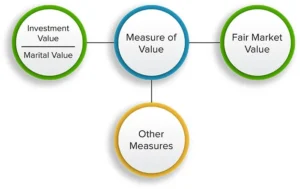
- Investment vs. Market Value: Courts often use a business’s “investment value” to the owner rather than its potential sale price to a third party. Investment value is the value of the business to the spouse who is operating the business.
What Approaches Are Used By Orange County Courts In Valuing Businesses?
Orange County courts typically rely on two accepted methods for valuing businesses in a divorce:
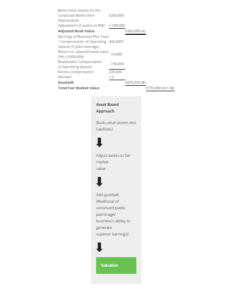
- Capitalization of Excess Earnings: This method analyzes the five years of income exceeding reasonable compensation for the owner to value goodwill and then adds to that value, the value of operating assets. The operating assets are not added back to the value.
- Capitalization of Earnings: This method capitalizes historical income to determine the business’s value.
- Prohibited Method: Courts cannot use speculative approaches like discounted cash flow (DCF), which estimate future earnings. Valuations must be grounded in historical data and tangible evidence.
Are There Additional Considerations In Divorce Business Valuation?
- Rules of Thumb: While industry guidelines (e.g. “two times gross sales”) might seem convenient, courts avoid them because they lack foundation and evidentiary support and lack credibility.
- Value: Even if a business has minimal or no goodwill or profits, courts may assign an “in-place value” to the business based on factors like operational infrastructure, location, website, and revenue continuity.
- Earnings: If a business grows significantly due to the operating spouse’s efforts post-separation, courts may consider valuing the business as of the separation date to exclude the growth during the past separation period.
Are There Any Specific Risks In Representing Yourself In A Divorce With A Business Involved?
While representing yourself might seem like a cost-saving option, it often leads to unfavorable outcomes in cases involving complex assets or businesses. Without professional guidance, your risk:
- Accepting an inaccurate, to inflated, or deflated valuation.
- Being unprepared against experienced opposing counsel.
- Prolonged litigation that increases stress and costs.
- Not knowing what settlement offer to make and not knowing whether to accept or counter the offer
Example: A poorly supported business valuation of $600,000 instead of $300,000 could cost you $150,000 or more in equalization payments. Investing in an experienced Newport Beach divorce lawyer can prevent these costly errors.
What Are The Alternatives For Cost-Conscious Business Owners Facing In A Divorce?
If retaining a Newport Beach divorce lawyer and forensic accountant feels financially out of reach, consider these strategies:
- Mediation: If successful, mediation can provide a neutral environment to negotiate business valuations and asset divisions without the expense of a trial.
- Limited Scope Representation: Hire a divorce lawyer to assist with specific tasks, like preparing for, and trying, any business valuation issues, while you handle other parts of the case.
- Valuation: Work with a divorce lawyer or accountant to prepare your testimony outlines for court. California law allows business owners to testify about their business’s value, provided their opinion is well-founded, supported by evidence, and not based on speculation.
Can A Person Appeal A Business Valuation Decision In A Divorce?
While appeals are possible, they are rarely successful. Courts have wide discretion in choosing valuation methods, as long as they are based on evidence and avoid speculation. Winning an appeal typically requires proving that the judge violated a legal principle or abused discretion, both challenging to demonstrate.
Are There Frequently Asked Questions That Are Asked By Business Owners Considering Divorce?
What if I owned the business before marriage? The business remains separate property, but any increase in value during the marriage may require a reimbursement to the community estate.
Can I just give the business to my spouse? No. Courts require an equal division of all community property. Simply transferring ownership to a spouse does not satisfy this requirement and, and in fact, might result in financial sanctions.
What if I no longer want to run the business? Courts cannot force you to operate a business after age 65. However, if you are younger, they may impute income based on your ability to generate earnings.
What Sets Us Apart
Selecting the right Newport Beach attorney for your divorce is critical. With over 600 divorce lawyers in Orange County, the process of choosing can feel overwhelming. At Minyard Morris, we stand out for our unwavering commitment to strategy, collaboration, and client success. For over 48 years, our firm has been a trusted name in family law, consistently delivering outstanding results.
If you have a small business and are getting a divorce, take the next step and call us at 949-724-1111 Or reach out via our online consultation form. Let us provide the guidance and representation you need to navigate your divorce with confidence.