Why Minyard Morris for Your Orange County Divorce?
Before hiring a divorce lawyer, it’s essential for a Santa Ana resident to evaluate the options carefully. Use law firm websites to analyze the what they say, and don’t say. Are they aligning with your objectives for how you want your divorce handled? Do their messages make sense and resonate with your goals?
Divorce is challenging on its own, but when business interests are involved, the process becomes even more complex. Decisions made during this time can impact your financial security for years to come. That’s why it’s critical for Santa Ana residents to work with an experienced Orange County divorce lawyer who understands both family law and the complexities of business valuation. The right divorce lawyers and team can help make this process more manageable and efficient.
At Minyard Morris, We understand how vital it is for our Santa Ana clients to feel secure and supported during such a major life change. As one of California’s top family law firms, we’re trusted for handling even the most complex divorce cases. Our team consists of 20 divorce lawyers focusing exclusively on family law cases filed in Orange County. With over 350 years of combined experience, we bring an unparalleled depth of knowledge to every Santa Ana case and offer personalized, strategic solutions to meet our clients’ needs.
In 2024, the esteemed and independent lawyer rating service, Best Lawyers in America® listed 19 of 20 Minyard Morris family law attorneys.

Why Small Business Owners Retain Minyard Morris
We know that divorce cases involving small businesses require more than a standard approach, they demand expertise and experience tailored to unique circumstances. At Minyard Morris, we take the time to understand every detail of our Santa Ana clients’ cases and create a custom strategy built around our clients’ goals.
We also recognize the stress that comes with these cases. Our mission is to guide you through this difficult process while keeping you informed and supported. You’re not just a case to us; you’re a priority. Whether it’s providing guidance or helping with tough decisions, we’re here to advocate for you and keep your goals front and center.
Efficient Representation With A Strategic Focus
We know you desire to resolve your divorce as quickly as is reasonably possible with sacrificing attention to detail and results. At Minyard Morris, We share your commitment to avoiding unnecessary delays. We aim to help our Santa Ana clients transition from “current client” to “former client” efficiently, while securing the best possible result. Communication and transparency are the heart of our approach. Our Santa Ana clients deserve to understand every aspect of the case and make informed decisions. Our Orange County divorce lawyers prioritize clear communication, explaining the process in straightforward terms so you can move forward with confidence.
Strategic Excellence
Strategic planning is the cornerstone of our success. For over four decades, we’ve held regular strategy meetings to tackle the most challenging family law issues. These meetings ensure each Santa Ana clients’ case benefits from the collective expertise of our 20 divorce lawyers.
Inside Our Strategy Sessions
Three times a week— Monday at 5:00 p.m., Tuesday at noon, and Thursday at noon— our legal team gathers to discuss the specifics of ongoing cases. These are not routine updates; they are in-depth strategy sessions where we analyze every angle.
We ask key questions, such as:
- How do we handle a particularly difficult opposing counsel, always referring to the judicial officer assignments?
- What is the best approach for sensitive issues when assigned to certain judicial officers, considering their preferences and tendencies?
- How can recent statutes or appellate decisions impact our strategy?
Our attorneys share insights, debate approaches, and refine strategies to ensure they are comprehensive, effective, and adaptable.
How Do You Quantify The Importance of Business Valuation Knowledge If You Are Planning To File For A Divorce?
Collaborating with a divorce lawyer and forensic accountant may seem costly at first, but the risks of proceeding without expert guidance are significant. Misvaluing a business can result in losing far more than the cost of legal representation.
Consider this scenario:
A Santa Ana resident spends $25,000 on attorney’s and accountant’s fees. The court then determines the business’s value to be $150,000 less than the spouse claimed. That’s a 6x return on the investment— rather difficult to achieve elsewhere. While no divorce lawyer can guarantee these results, expert representation often translates into substantial financial savings and greater peace of mind.
How Are Assets Divided In A Divorce?
California law mandates equal division of community property, which includes all assets acquired during the marriage, However, “equal” doesn’t mean every asset is split in half; instead, the total marital estate must be divided equally.
Example of Division:
- Business Value: $400,000
- Other Assets: $100,000
- Total Estate: $500,000
Each spouse is entitled to $250,000 of the $500,000. If one spouse retains the business and the other spouse retains the other assets at $100,000, they may owe the other spouse $150,000 in equalization payments, often spread over time to account for liquidity issues. Factors such as interest, duration of payments, and security may also be negotiated.
Occasionally, couples agree to a “global settlement”, forgoing precise valuations. This approach may work when one spouse is willing to accept less than their fifty percent share. Such decisions must be client-driven and include a knowing waiver of community property rights.
What Are The Challenges In Valuing A Small Business In A Family Law Matter?
Valuing a small business is often more complex than appraising a large, established company. Common challenges include:
- Owner Dependency: Small businesses often rely heavily on the owner’s personal skills, relationships, or reputation, making them harder to value.
- Incomplete Financial Records: Many small businesses lack professionally maintained books, requiring additional work by forensic accountants to prepare accurate valuations.
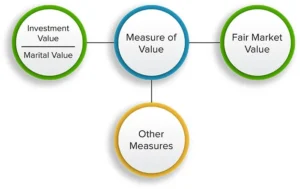
- Investment vs. Market Value: Courts often assess the business’s “investment value” to the owner, rather than its potential sale price to a third party, or a value based on projected future income.
Engaging a divorce lawyer and forensic accountant ensures these challenges will be addressed, providing a defensible and accurate valuation.
How Do Orange County Courts Value Small Businesses In Family Law Matters?
Orange County courts use established methods to value businesses in divorce cases, but they have wide discretion in this area:
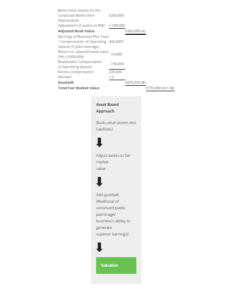
- Capitalization of Excess Earnings: This asset-based approach evaluated total income exceeding reasonable compensation for the owner to establish goodwill. Added to goodwill are all tangible and intangible assets which equals the total value of the business.
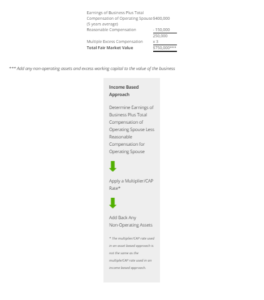
- Capitalization of Earnings: This income-based method focuses on historical income and determines the value of the business’s value.
Prohibited Methods:
Courts cannot use any speculative techniques, such as discounted cash flow (DCF), which project future earnings. Valuations must rely on historical data and evidence presented in court.
What Additional Considerations Exist In The Valuation Of Small Businesses In Orange County Family Law Matters?
- Rules of Thumb: While industry guidelines (e.g. “two times gross sales”) are used commonly to value businesses as a ballpark starting place, some family courts avoid them. Without a foundation to explain how the rule of thumb were developed and supporting these rules, they won’t be inadmissible.
- In-Place Value: Even if a business has limited profits or goodwill, courts may assign an “in-place value” reflecting its operational continuity, existing revenue, and infrastructure.
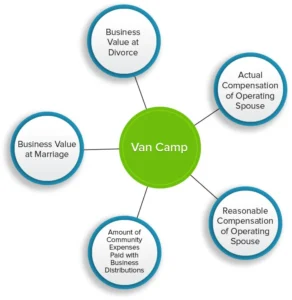
- How Does the Court Address Post-Separation Growth: If a business significantly grows post-separation due to the operating spouse’s efforts, courts may use the separation date for valuation to exclude that increase from community property.
Can A Party Appeal A Business Valuation Decision In A Family Law Matter?
Dissatisfied with the court’s valuation? While the appeals are possible, they are rarely successful. Courts have significant discretion in choosing valuation methods, as long as they are evidence-based and avoid speculation. Winning an appeal typically requires proving the judge violated legal principles or abused discretion— difficult hurdles to clear.
Are There Any Risks Of Self-Representation In A Family Law Matter?
Handling a divorce without professional guidance can lead to costly mistakes, particularly cases involving businesses. Some of the risks are set forth below:
- Not knowing what settlement offer to make and which one to accept or counter.
- Accepting an inaccurate or inflated valuation.
- Prolonged litigation, increasing costs and stress.
- Not being able to get important documents and facts into evidence in a trial.
Example:
If a business is overvalued at $400,000 instead of $300,000, the resulting equalization payment could cost you an additional $50,000. Professional representation ensures accurate valuations and protects your financial interests.
Are There Any Cost-Effective Alternatives For Representation In An Orange County Divorce?
If traditional representation feels out of reach, there are alternatives to consider:
- Mediation: Mediation allows parties to negotiate business valuations and property divisions with the help of a neutral third party, often saving time and money.
- Limited Scope Representation: Hire a divorce lawyer for specific aspects of your case, such as preparing for hearings or valuing the business, while handling other parts independently.
- Owner-Testified Valuation: California law allows owners to testify about their business’s value, provided their opinion is well-founded, supported by evidence, and does not include speculation. A lawyer or forensic accountant can help you prepare credible testimony.
The Minyard Morris Difference
At Minyard Morris, we combine over four decades of experience with strategic, personalized service. Our firm’s commitment to excellence has made us a trusted choice in Santa Ana clients for over 48 years. Whether navigating business valuations, negotiating settlements, or litigating disputes, we are dedicated to achieving the best possible outcome for our Santa Ana clients.

When You Are Ready, Consult With A Santa Ana Divorce Lawyer
If you’re navigating a divorce involving a small business, let Minyard Morris help you protect your interests and secure your future. Call us at (949)724-1111 or visit our Initial Consultation Page to schedule a consultation.