Why Choose Minyard Morris for Your Orange County Divorce?
Selecting the right divorce lawyer will be one of the most critical decisions you’ll face. When small business ownership is involved, the stakes are even higher. The outcome of your case will significantly influence your financial future and long-term goals. At Minyard Morris, we understand the unique challenges Tustin business owners encounter during a divorce and are here to guide you through every step with clarity and confidence.
With over 48 years of experience and more than 350 years of combined attorney expertise, our firm is a trusted name in Tustin. Our 20 divorce lawyers work collaboratively to provide personalized strategies that align with the goals of our Tustin clients, especially when business valuation is an issue.
In 2024, the esteemed and independent lawyer rating service, Best Lawyers in America® listed 19 of 20 Minyard Morris family law attorneys.

Divorce Challenges For Orange County Business Owners
Divorce is always a challenging process, but owning a business adds extra layers of complexity. A few key issues include:
- Business Valuation: Small businesses can be difficult to value due to factors like goodwill, accounts receivable, and dependency on the owner’s reputation and skills.
- Asset Division: California’s community property laws mandate equal division of marital assets. Determining the value of a business and how it fits into the division is rarely straightforward.
- Financial Pressure: Divorce can strain cash flow, particularly for business owners balancing normal operational needs, personal expenses, support, and legal costs.
These complexities demand a nuanced approach, and at Minyard Morris, we pride ourselves on crafting strategies tailored to protect our Tustin clients business, assets, and futures.
How Minyard Morris Excels In Complex Cases
Unparalleled Strategic Planning
Our firms approach to strategy sets us apart. Three times a week, our entire team of 20 divorce attorneys gather for in-depth discussions about our Tustin clients’ cases. This collaborative environment ensures that all of our Tustin cases benefit from our collective expertise, allowing us to:
- Craft detailed strategies for unique legal challenges.
- Stay up-to-date on the latest family law trends and judicial preferences.
- Analyze settlement options and trial tactics to align with your goals.
For our Tustin clients, this approach provides a distinct advantage, having access to a team that brings over three centuries of combined legal knowledge to the table.
Addressing Business-Related Challenges In An Orange County Divorce
Divorce is inherently complex, and when a small business is involved, it adds an additional layer of difficulty. For business owners in Orange County, understanding how the courts evaluate and divide business interests during divorce is essential. Unlike more traditional assets, such as a bank account or vehicle, businesses present intricate challenges that require specialized attention. This article provides Tustin residents with a view into these complexities and offers strategies to help you navigate the process, whether working with a seasoned divorce attorney or considering alternatives.
A thorough understand of business valuation can significantly enhance your ability to collaborate with your legal team and financial experts. It can also streamline the process, reduce costs, and empower you to make an informed decisions about representation. For small business owners, this knowledge is particularly important, as the outcomes of these valuations significantly impact the result of the divorce settlement or judgement.
While the thought of hiring a divorce attorney and forensic accountant may feel costly to Tustin residents, the absence of professional assistance can result in a much higher financial risk. Consider this scenario: an investment of $25,000 in legal representation leads to a court-assigned business valuation $150,000 lower than initially demanded. This represents a sixfold return on investment, underscoring the potential value of professional guidance. While such outcomes cannot be guaranteed, they illustrate the importance, to a Tustin client, of expert involvement in these cases.

How Are Assets Divided In Divorce Proceedings?
To understand the treatment of businesses in divorce, it’s important to grasp the principles governing property division. In Orange County, as throughout California, community property must be divided equally. This does not mean splitting every asset 50/50 but rather ensuring that both spouses receive equal value from the marital estate. Accurate valuation of all assets, including business interests, is fundamental to achieving this equal division.
For instance, if a business is valued at $400,000 and the couple’s remaining community assets total $100,000, the marital estate is worth $500,000. Each spouse is entitled to $250,000. The spouse who retains the business would need to compensate the other spouse $150,000 to balance the distribution. Because liquidity is often limited, these payments may be structured over time and may need to address: interest, duration, and security for the obligation.
In certain cases, spouses may opt for a “global settlement”. This approach involves agreeing to divide assets without precise valuations, often resulting in an uneven distribution. While rare, this method can be cost-effective and practical in situations where at least one party is not focused on receiving exactly fifty percent of the estate. Such decisions must be client-driven, with clear waivers of rights to fifty percent of the community property.
Are There Any Unique Considerations When Valuing Small Businesses?
Valuing a small business during divorce introduces unique challenges. Unlike larger companies, the value of a small business often hinges on intangible factors, such as the owner’s reputation, client relationships, or specialized expertise. Retaining a knowledgeable divorce attorney and forensic accountant is crucial for ensuring comprehensive and accurate valuation. These professionals analyze a variety of factors, including goodwill, accounts receivable, physical assets, liabilities, and cash flow.
However, the cost of engaging such experts can be burdensome for small business owners, especially when the business generates just enough revenue to cover personal living expenses. Many small businesses are essentially extensions of their owners’ work rather than standalone enterprises. Balancing the demands of operating the business, meeting support obligations, and covering professional fees can be overwhelming.
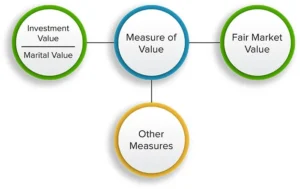
Courts often rely on the “investment value” appraisal approach, assessing the economic benefit the business provides to its owner, rather than its market value or potential sale price. This method avoids speculative income projections and focuses on the tangible financial value the business offers in its current state.
What Valuation Methods Are Used In The Orange County Family Law Courts?
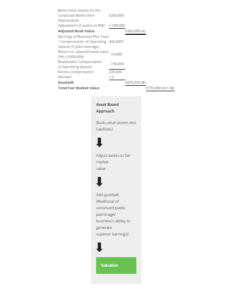
Family law courts in Orange County primarily use two methods to value businesses: capitalization of excess earnings (an asset-based approach) and capitalization of earnings (an income-based approach). These methods rely on historical data and avoid speculative valuation techniques such as the discounted cash flow (DCF) method, which projects future earnings and is not permissible in family law.
Additionally, courts do not rely on industry specific “rules of thumb” for valuation. While such shortcuts are common in other settings, they are not admissible in family law because they lack the necessary evidentiary foundation relative to their creation. For example, applying a rule like “two times gross sales” fails to account for critical details, such as geographic differences, transaction terms, or market conditions specific to the business in question.
What Is An “In-Place” Value?
When a business lacks significant goodwill or profitability, rather than placing value on goodwill, courts may assign an “in-place” value to reflect it’s operational assets, such as its location, website, existing customer base, and the existing revenue for the customer base. While significantly lower than goodwill, this value acknowledges the business’s tangible and intangible components as an existing entity.
Is A Business That Is Almost Exclusively Reliant On One Party’s Effort To Exist Valueless?
A common misconception is that a business has no value if it depends entirely on the owner’s efforts. Courts, however, are required to assign value to all community assets, even if the business’s worth is modest or tied directly to the operating spouse. Similarly, while courts cannot compel a spouse to continue operating a business, after his age of 65. Shutting it down without proper notice may lead to allegations of waste or breach of fiduciary duty.
Are There Any Special Considerations for Business Owners In A Divorce?
- Pre-Marriage Ownership: Businesses established before marriage are considered separate property. However, if the business increased in value during the marriage, the community may have a claim for reimbursement.
- Support Payments: Although it may feel unfair to buy out your spouse’s share of the business and also pay support from its profits, this is permissible because under California law, property division and support obligations are treated separately.
- Retirement or Closure: Courts cannot require a business owner, aged 65 or older, to continue operating a business. However, any decision to close or sell the business must be handled carefully and with notice to avoid allegations of waste or fiduciary breaches.
- Fiduciary Obligations: Starting a business competing with a community business, while still married, could violate fiduciary duties, potentially leading to significant legal repercussions.
How Do Courts View Income Taxes And The Valuation Date Of A Business?
The valuation of businesses is generally based on the date closest to trial or settlement. However, for businesses tied to personal services, the valuation may align with the date of separation to account for the operator’s post-separation contributions being separate property.
Income taxes are typically excluded from valuations unless they are immediate, specific, and directly tied to the divorce. An exception are, accounts receivable which are often valued after accounting for taxes, though this issue is usually resolved by the time the case reaches trial or settlement when the account receivable have either been paid or written off.
What Are The Options Relative To Legal Representation In A Divorce?
Although self-representation is an option, it carries significant risks, especially when your spouse retains experienced legal counsel and financial experts. If neither party has a lawyer or an accountant, the playing field may be level and not having proper evidence and expert testimony, the court may assign an unfavorable or inaccurate valuation to your business. If retaining full legal representation is financially unfeasible, consider these more cost effective alternatives:
- Mediation: Mediation can facilitate discussions about business valuation and asset division, potentially avoiding the need for trial. Mediators often introduce forensic accountants to provide joint valuation estimates, helping the parties reach an agreement.
- Unbundled Legal Services: Hiring a divorce attorney for a specific aspect of your case, such as business valuation, allows you to manage costs while benefiting from professional guidance in a more cost-effective manner.
- Consulting Professionals: Engaging a less experienced divorce attorney or forensic accountant as consultants who can provide valuable insights at a lower cost, helping you prepare for negotiations or court proceedings.
What Steps Should A Self-Represented Party Take Before A Trial On A Valuation Issue?
If self-representation is the only option for a Tustin resident, preparation is critical. Consulting with a low-cost divorce attorney and/or forensic accountant who can help you understand the key issues. Reviewing online resources about California business valuations and observing court proceedings can also provide valuable insights. The Orange County Superior Court Facilitator’s Office is an excellent resource for assistance with court forms and procedural guidance at no cost. You Tube has some very good videos on trial practice.
Why Minyard Morris Stands Out
Divorce is one of life’s most difficult transitions, especially for business owners. Choosing Minyard Morris means choosing a firm that:
- Combines unmatched expertise with a client-focused approach.
- Offers customized strategies tailored to your needs and goals.
- Utilizes a collaborative team environment to deliver exceptional results for its Tustin clients.
Take The Next Step
For more than 48 years, Tustin residents have trusted Minyard Morris to navigate their most complex family law cases. If you’re facing a divorce involving business ownership, let us help protect your interests and secure your future.
Contact us today at (949)724-1111 or visit our Initial Consultation Page to schedule a consultation.